Flooring: part 1 of 4
There’s a special kind of optimism that comes with removing old floor covering. I pulled back a corner of the old vinyl, saw it peel away reasonably cleanly, and thought: I’ll be done in an hour.
Then I found the glue. Old vinyl flooring is often stuck down with adhesive that had decades to cure into something with the structural integrity of a geological formation. You pull the vinyl - nothing happens, you pull harder - it tears.
This is the story of working through three approaches, two of which were insufficient, before finding the one that actually worked.
A safety note before anything else
If your vinyl flooring was laid before some time in the 1980s (depends on the country), stop before you start attacking it aggressively. Vinyl floor tiles from that era may contain asbestos. Asbestos is RELATIVELY (I can’t emphasise it too much) safe when left untouched, but dangerous when you start cutting it.
If in doubt, send the material for testing. My house was built in the 1990s, well after the total ban on asbestos in Sweden.
Attempt one: hand tools
The classic scraper is the obvious starting point. So is a knife, a pry bar, a cold chisel supported by a hammer. I experimented with a few options, after an hour I removed maybe half a square meter. Heating the glue didn’t help.
That definitely won’t do.
Attempt two: oscillating multitool
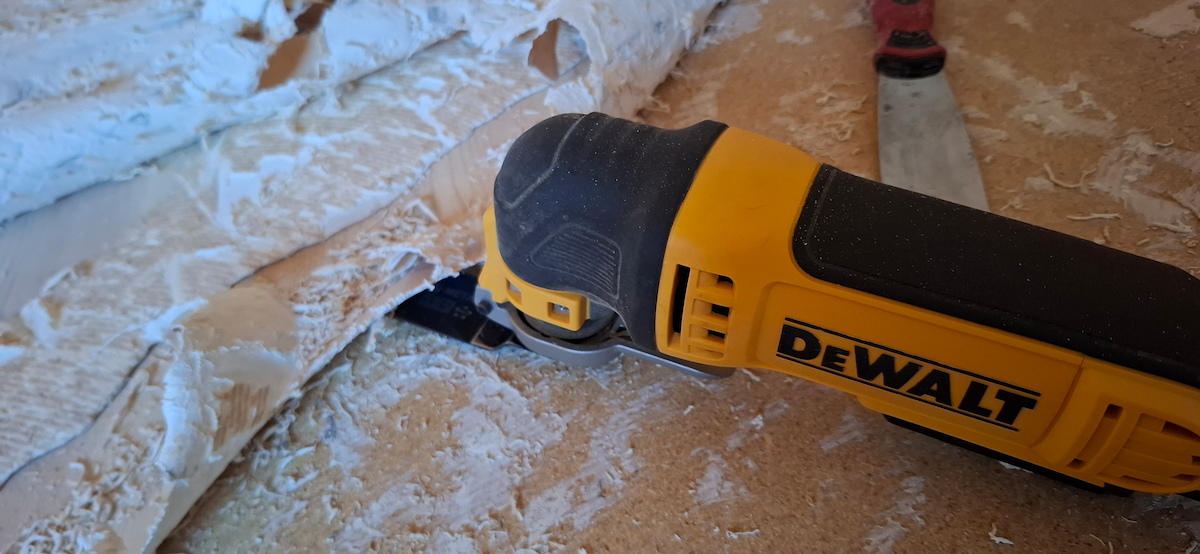
Oscillating multitool is great for home renovation - I’m going to write more about it soon. It’s excellent for scraping in general, much faster than a hand scraper and requiring less effort.
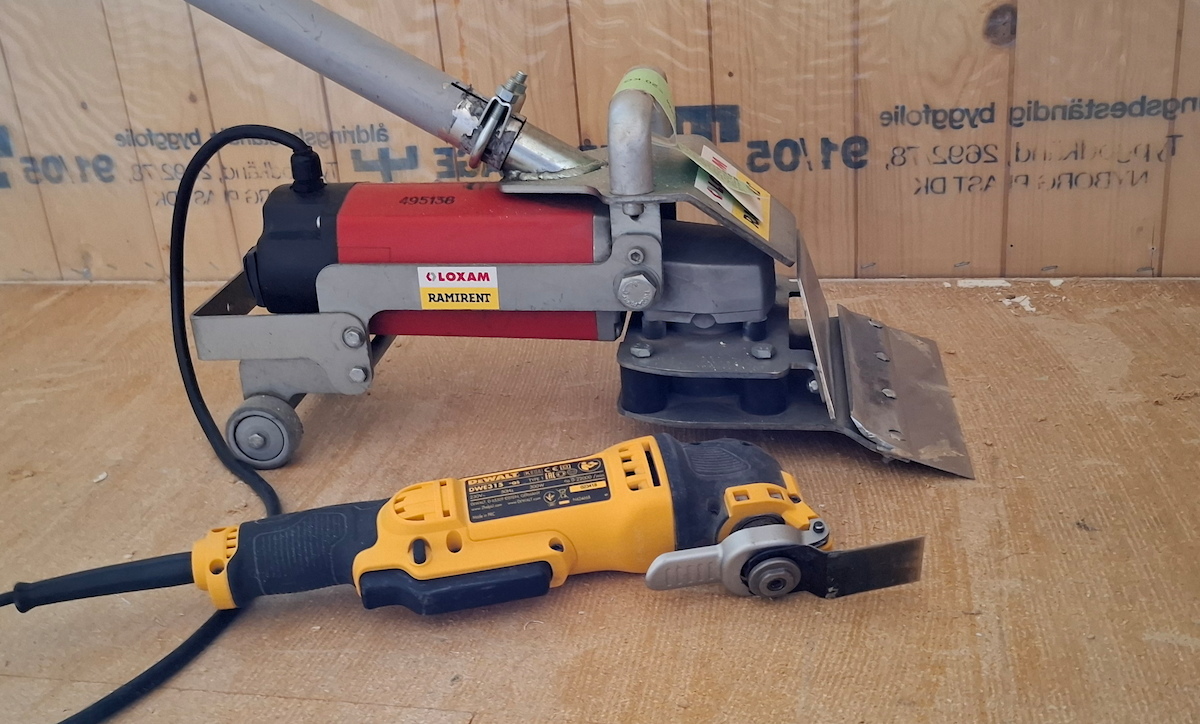
But for that kind of job, the blade is too narrow and the tool is too weak. You’re working a strip maybe 50–80mm wide at a time. If I only had one small room, it would take a day. But I had a whole house to do. That would take weeks (I have my day job), probably wear out the tool, plus working with it for more than an hour gets really unpleasant.
It was still the right tool for the doorways, the corners, the bits around pipes - all the places a large machine can’t reach. For the open floor area, I needed something bigger.
The actual solution: the floor scraper machine
The electric floor scraper I got - also called a floor stripper - was essentially an oversized version of my oscillating multitool. A blade was wider and longer, the motor had 1500W compared to 300W of my tool. The weight of the machine and the wheeled base make pressing the blade into the floor easier (not super easy).
The difference in speed is not incremental. It’s transformative. What was an hour of back-breaking labour by multitool (not to mention hand tools) takes five minutes. The machine keeps constant pressure on the blade, works a wide path on every pass.
Depending on your floor material, you still might have a hard time pressing the machine into it. The solution is to cut it into more manageable strips. Usually, a few minutes with a boxcutter. But in one room, I had 2 layers of very heavy vinyl with a cured adhesive between them. It was impossible to press the machine for more than a few centimeters, and cutting with a knife would take ages. I had to use my trusty plunge saw, set to the depth of 5mm. Cutting vinyl is messy even with dust extraction, if you ever have to do it, wear a dust mask.
Rent, don’t buy
An electric floor scraper is expensive and you will use it once, maybe twice in a lifetime. Two sensible options are: rent, or buy second hand and possibly resell. I rented for a weekend, that was enough.