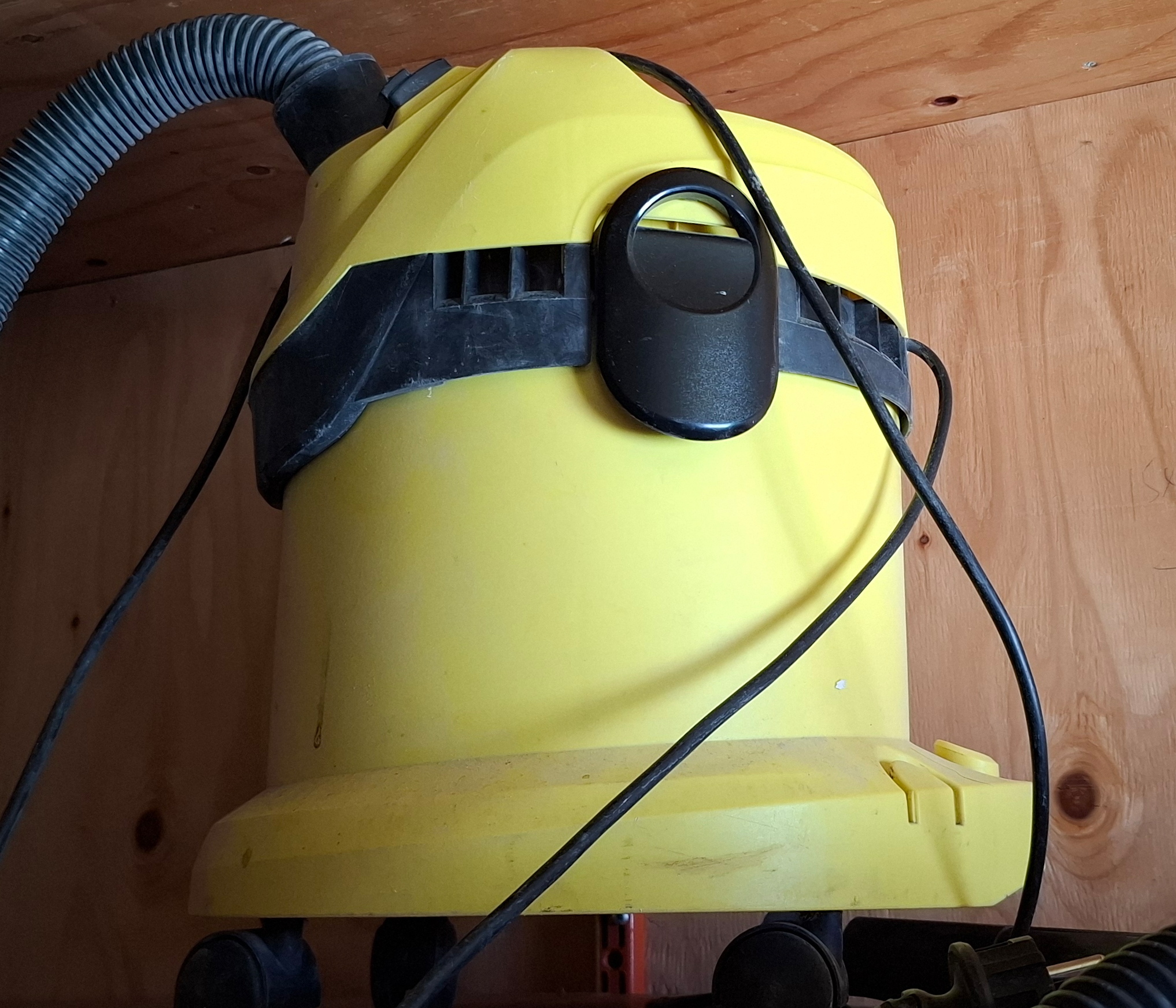
I’m on my third workshop vacuum now. The first one was Parkside, an old model from about 15 years ago. It never cleaned properly, I don’t even remember if it broke or I got rid of it because it was useless. Next one was a small Karcher. It worked great for years, but I only did occasional DIY projects. When I started the large renovation, I killed it in a week. It’s now on a shelf, until I decide if I want to replace the motor unit or bin it.
Which meant I had to buy a replacement quickly, I couldn’t research the best model and look for bargains. In rural Sweden there’s no “next day delivery”, it’s “in three days if you are lucky”. I had to choose from whatever was available in nearby shops.
The immediate requirement was renovation. Wood dust, plaster and cement dust, occasional metal filings and wet mess. Nothing toxic, but a lot of it.
The longer-term use case is lighter: ongoing DIY projects, sawing, sanding, drilling, the usual.
Workshop vacuum vs regular vacuum
A regular domestic vacuum cleaner is a civilised tool for civilised places. It has good filtration, reasonable noise levels, an assortment of finely shaped attachments for different surfaces and spaces. And you would break it in minutes if you tried to use it on a construction site.
A workshop vacuum can handle wood shavings, plaster dust and metal filings. Most can also handle wet stuff, they can even be used to pump out water.
Can you use a workshop vacuum for regular domestic cleaning? Yes. Would you enjoy it? Definitely not. It’s heavy and it’s LOUD. Plus, once you used it for intended purposes, it’s forever dirty.
Features to look for
Tank capacity. My old vacuum had a 15L tank. For occasional use it was good enough, it took months to fill. For the renovation I wanted a 30L model.
Filtration. Some vacuums are rated for hazardous materials such as asbestos. For that use, you also need to line it with a disposable bag, so make sure you stock them. But I didn’t need that, regular filter was good enough for me.
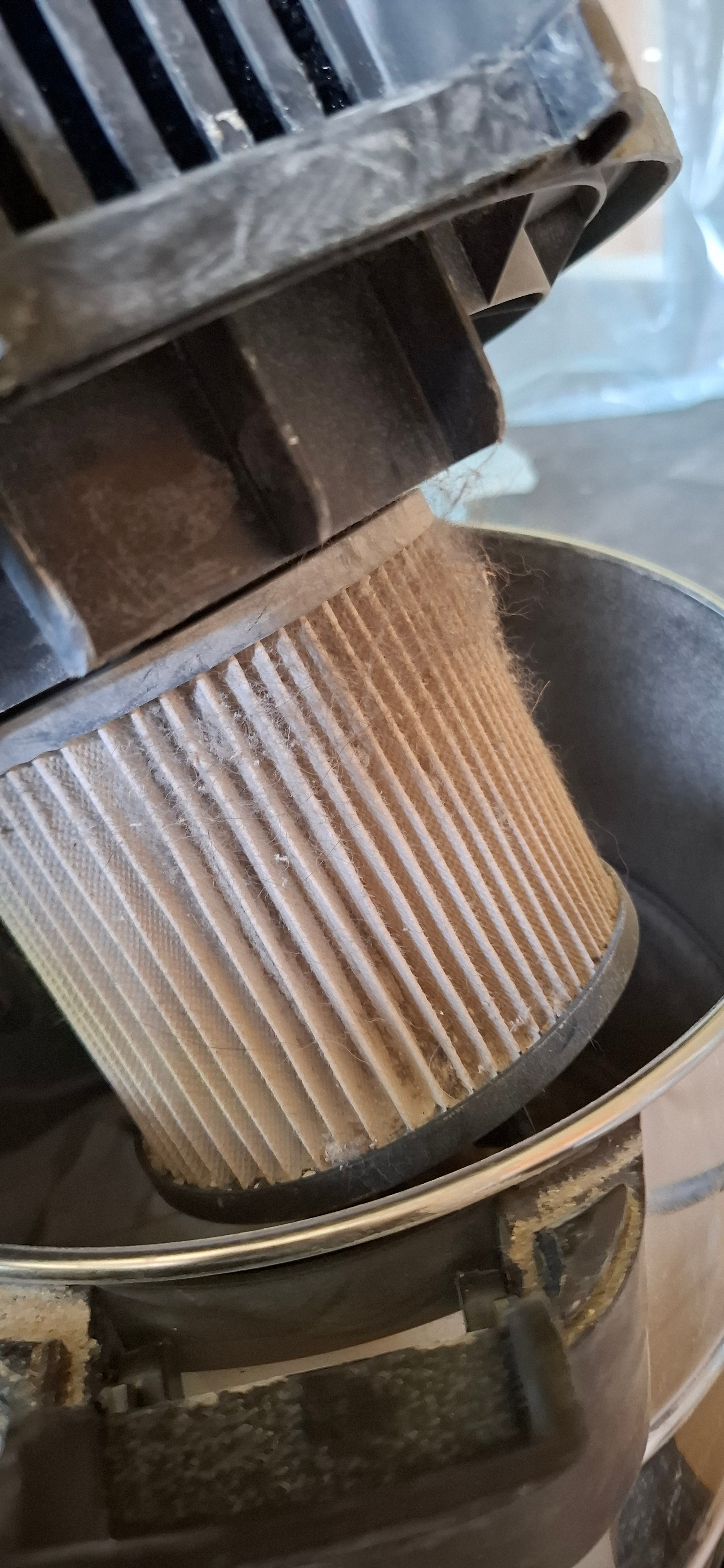
Auto filter cleaning. As fine dust builds up on the filter, suction drops. Some vacuums have an automatic mechanism that taps the filter periodically to knock accumulated dust back into the tank. Very convenient. Mine doesn’t have it though.
Wet/dry capability. Most workshop vacs handle both. Wet pickup requires removing the standard filter and replacing it with a foam sleeve.
Power tool socket with autostart. Some vacuums have a socket on the body - you plug your power tool into it, the vacuum starts automatically when the tool does, stops when the tool does. More important for woodworking than for renovation. Also, you would need to make sure the socket where you plug the vacuum can handle the combined power of both, which is usually above 2kW.
Small differences. Things like: how long the hose and power cord are, how well the castors turn, are there places for storing extra attachments (in my case: 2m, 3m, very well, no but the previous had it). If you’re in a comfortable position of comparing similar models, you can be choosy.
What I got
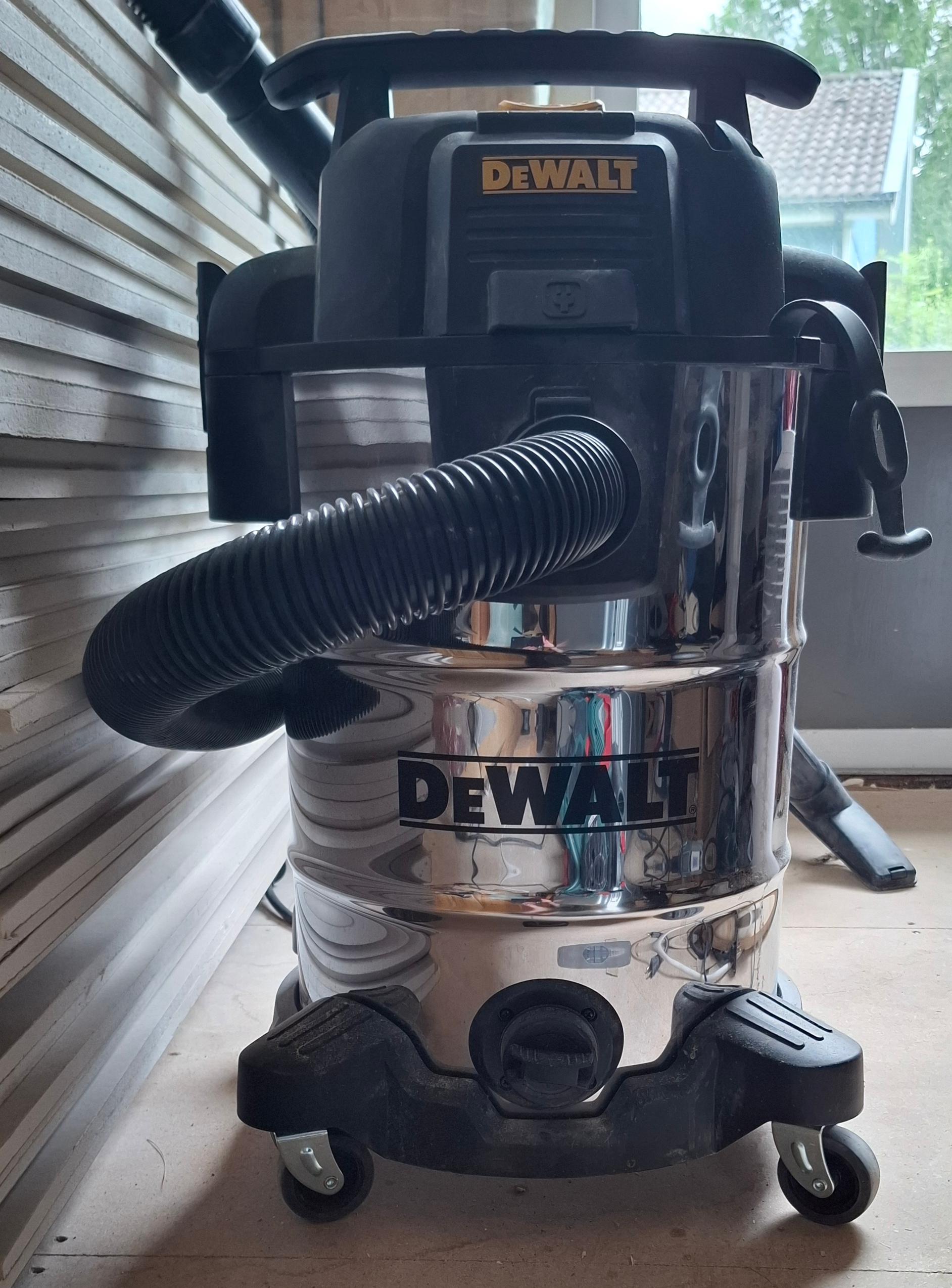
The DeWalt DXV30SAPTA. Thirty litres, stainless drum, wet/dry. There was a decent deal on it at the time, and the more important factor was DeWalt’s build quality. It should survive the renovation.
It is, as expected, large and loud. But my noise-cancelling headphones do a great job on the constant hum. It cleans very well. It came with several attachments, but I only use two: the wide brush and the narrow nozzle. There’s also blower mode: the hose can be connected to the exhaust. I found this feature useful a few times.
I sometimes connect the vacuum to tools - sanders, planer and plunge saw have dust extraction ports. I had to buy adapters for them, since every manufacturer uses a different diameter.
It doesn’t have auto filter cleaning. It would be really useful, sometimes I need to clean it several times per day. Well, you can’t always get what you want. I keep an old toothbrush and use it when I see it doesn’t suck.