Every DIYer eventually has to move from a handsaw to an electric saw. Which type to choose? Handheld circular saws look intimidating (though they’re safer than they seem) and making an accurate cut takes practice. Jigsaws are a common choice (the one I actually made years ago - my saw broke quickly and I never felt a need to replace it). Table saws look dangerous and they really are. Mitre saws are great for some tasks and useless for others.
My opinion: your first electric saw should be a plunge saw (also called a track saw). It’s the only type that will give a beginner accurate results from day one and makes an injury very unlikely.
What is a plunge saw?
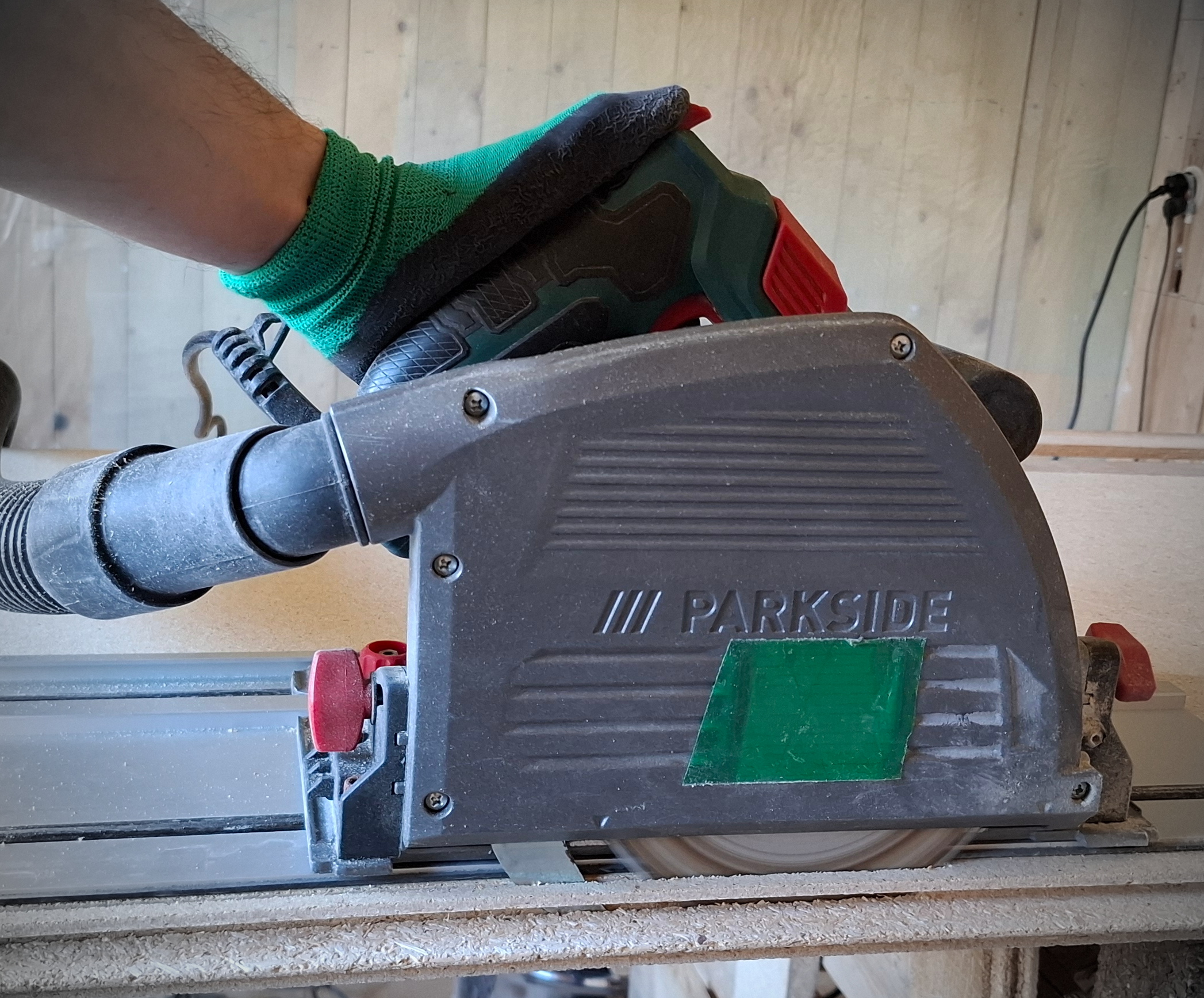
A plunge saw looks a bit like a handheld circular saw, but it runs along a guide rail and the blade can drop straight down into the cut, doesn’t need to enter from the edge (though it can). The blade is fully enclosed when not cutting - it only emerges when you press the saw down, and only to a specified depth.
The track is the key bit. You clamp or position it on your workpiece, set the saw onto it, and it physically cannot go anywhere except along that line.
Why it’s great for beginners
Accuracy
A handheld circular saw is the closest kin of a plunge saw. But it’s not that beginner-friendly. The saw can wander if your technique is off. Cutting a board to length is perfectly doable freehand, but long straight cuts are hard. The solution is to improvise some sort of track - for example, clamp a board to guide the base of your tool.
But why improvise when you can have a reliable solution that’s accurate to a millimetre or better? Set the track to your line, run the saw along it - done. It’s almost impossible to do it wrong.
And most other types of electric saws are even worse than handheld circular saws. Jigsaws have a flexible blade that can cut a curved line. And it usually does, whether you intended or not. A sabre saw is great for rough construction and deconstruction jobs, but it’s not a precision instrument. The only tool with similar accuracy is a table saw, but it requires a lot of training.
Safety
I don’t even have to mention table saws here. The tool has probably amputated more fingers than all surgeons in the world.
A handheld circular saw is not as dangerous as it seems. Sure, that toothed disc rotating at 4000RPM would rip flesh into pieces, but modern versions have a blade cover that slides away only revealing a small portion of the blade. The real problem is kickback - when the blade gets stuck, the tool tries to rotate instead (remember conservation of momentum from your physics lessons?) and if you’re unprepared, it might pull the tool out of your hand and send it flying. Let’s hope that your other hand wasn’t near the blade.
A plunge saw has a fully enclosed blade. Kickback is still possible, but then it usually stays on the track. Only if the kickback is very hard will it jump off - it has happened to me a few times. But it’s a plunge saw: it only exposes part of the blade when you press it down, and the moment it jumps off the track, the whole mechanism springs back up instantly.
Of other popular types, jigsaws and sabre saws don’t feel that intimidating because they work like a mechanised handsaw - the blade goes back and forth. They never kick back hard. Yet the blade is fully exposed. If it touches your body, you won’t lose a limb, but you’ll get a cut.
Another thing is dust extraction. A plunge saw connects to a vacuum cleaner, considerably reducing the amount of sawdust in the air. I actually like the smell of wood dust, but it turns out it’s mildly hazardous. Dust from MDF and other chipboards is worse.
One tip I came across online: the plunge saw has a small window in the blade enclosure for replacing the blade, and a lot of dust shoots out through it. Just put a piece of tape over it - you won’t be using the window that often.
Versatility
Anything you can do with a handheld circular saw, table saw or mitre saw can be done with a plunge saw, with the same or better accuracy. The reverse is not always true. There are also some things that only a plunge saw can do.
Where it shines
Cutting sheet goods
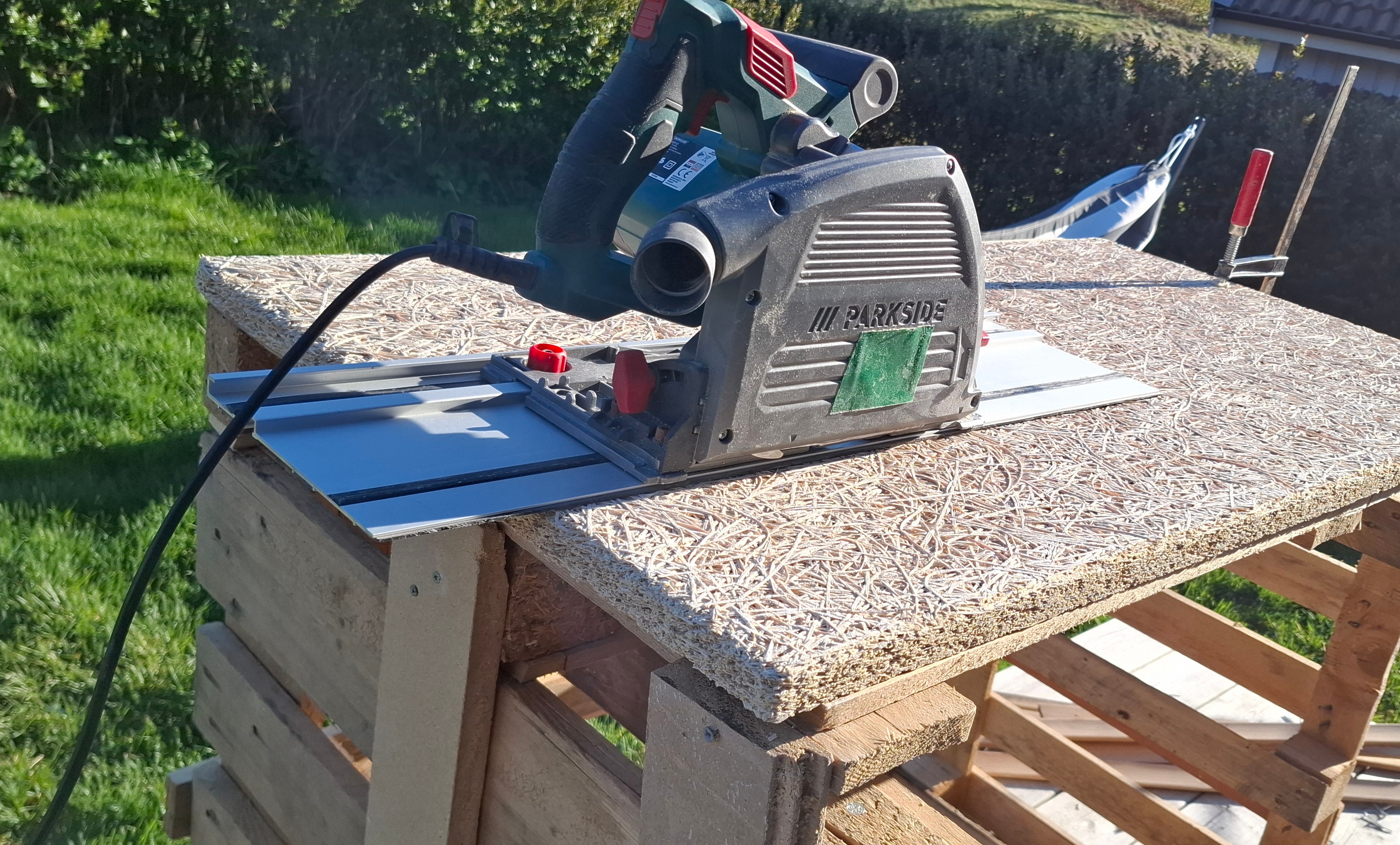
Plywood, OSB, MDF, laminate sheets, worktops - this is the plunge saw’s home territory. I’m in the middle of a home renovation and each day I cut floor panels or wall material.
Full sheets are awkward to cut on any other saw; few amateurs have work surfaces large enough. A plunge saw lets you lay the sheet on the floor (a common way of protecting the floor is using a piece of rigid foam (styrofoam) - and of course set the depth so the blade only barely emerges from the bottom), position the track, and cut it cleanly and safely. I used that technique, my workbench, pile of material, whatever was convenient at the moment.
Installing a sink or sawing into floorboards
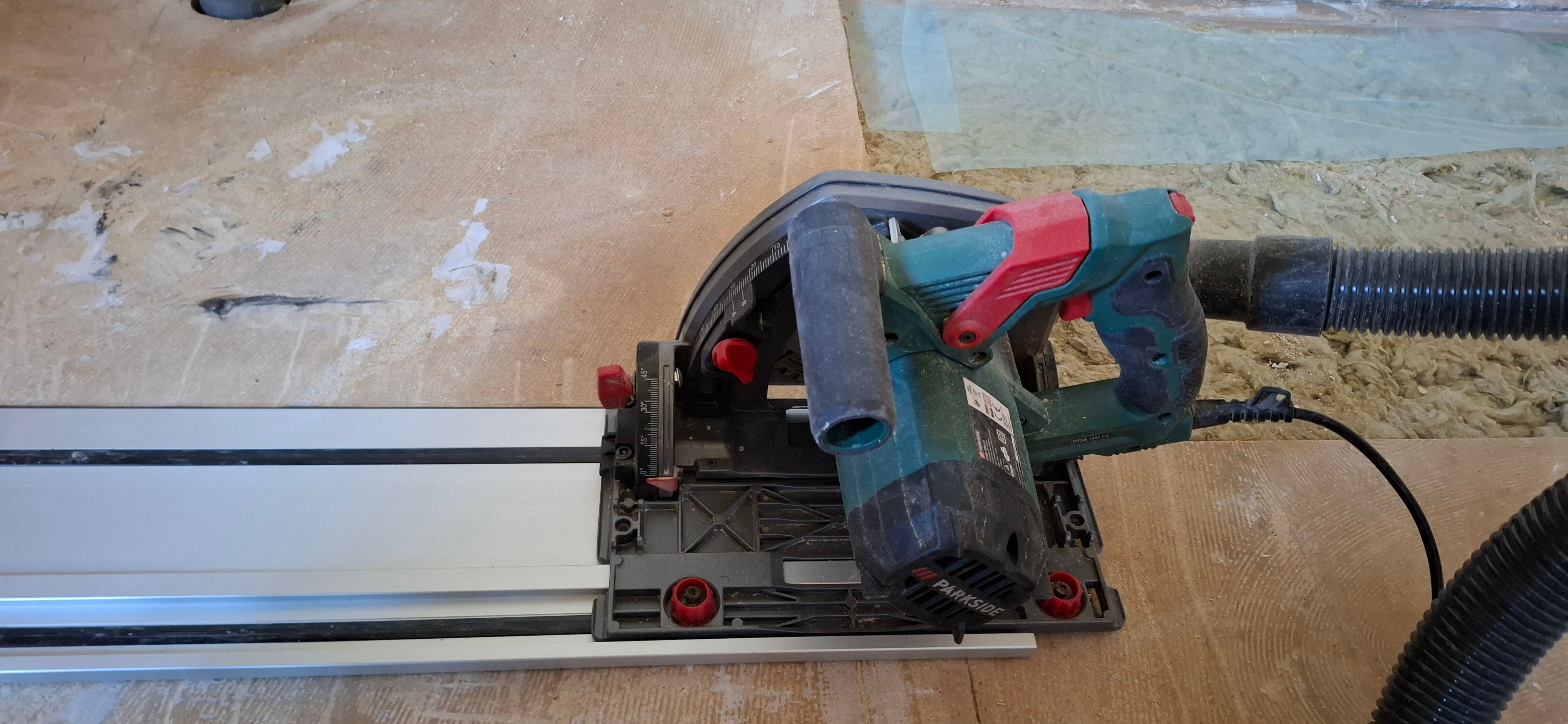
This is where the plunge part gets important. Unlike most saws, a plunge saw can start a cut in the middle of a surface - you don’t need to enter from an edge. You set the blade depth, position the saw, and plunge straight down into the floor. You can cut the floorboards without damaging the beams underneath.
Granted, it doesn’t happen often for most DIYers. It happened to me though. I bought the tool for the track, not for the plunge function, but I was glad I had it. Both features were perfect for replacing the floorboards. The alternative would be to drill a hole and put a jigsaw blade through it - far slower and imprecise.
Where it works, but is not the best tool for the job
Cutting timber to length
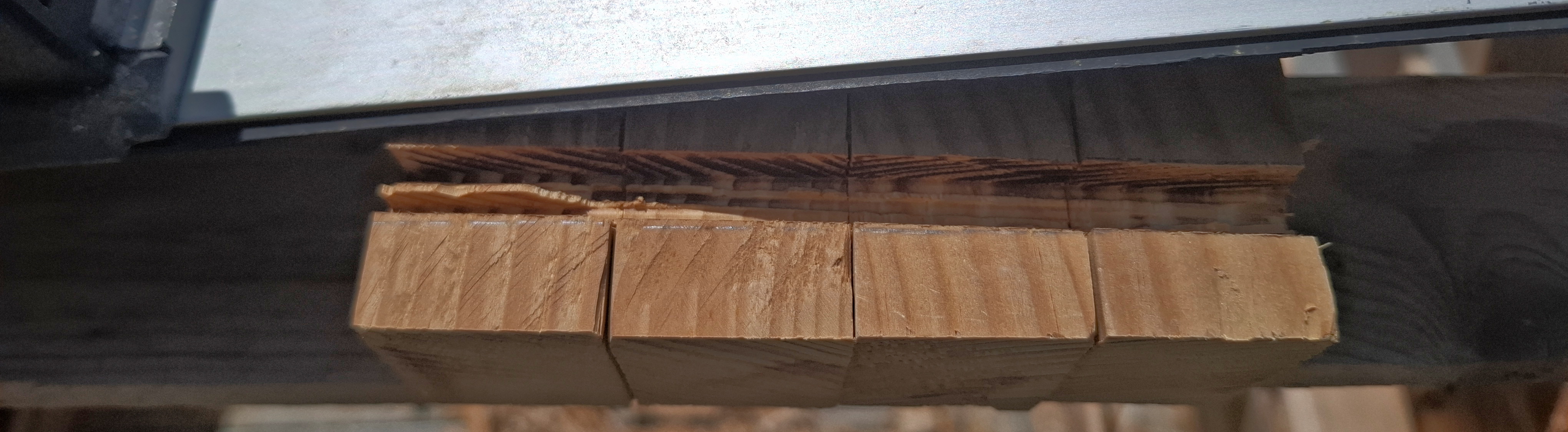
It’s possible, but not very convenient. You have to position the track, clamp it or hold it in place, then run the saw along it for just a few centimetres. It works, and the cut will be accurate and clean, but it takes longer. You can use a plunge saw without a track if you care more about speed than accuracy. It’s then closer to a handheld circular saw, but still less convenient.
A mitre saw (chop saw) is fast and accurate for repetitive length cuts, especially at angles. But it can’t do long cuts. If you’re into serious woodworking, get it in addition, not instead of the plunge saw.
Making grooves
Who says you need to saw all the way through the board? Grooves are a common feature in furniture projects. A router would be better for that purpose, but I don’t have one. Instead, I set the depth to the few mm I need, position a track, run it once, move the track roughly by the width of the blade, run it again, repeat until I get to the end.
It’s not great. It takes time and I need to clean the groove with a file. If I had to do it every day, I would get a router, but for an occasional task it’s fine.
If it’s so great, why do so few people have one?
If you’ve never heard of a plunge saw, I don’t blame you. Until recently, you would have had to spend a lot to get one. It was considered a professional tool for furniture makers, cabinet installers and so on. Plunge saws were invented by Festool, one of the most expensive and reputable brands.
My first experience was actually with a Festool. I had a project that required long, straight cuts and couldn’t do it with a handheld saw. I wanted to rent a table saw, but the rental shop owner convinced me to try a plunge saw instead - and I’m glad he did. Not only did I finish the project quickly and without wasting any material, but I still have all my fingers. And as so often happens when renting tools, a few days later I needed it again. I wanted to own one.
What I have
The Festool would have been more expensive than all of my tools combined. I could never justify buying one if it was going to spend most of the time on a shelf. But a few months after I tried the Festool, I saw a cheap plunge saw in Lidl (PTSS 1200 C2, to be specific). I’ve had mixed experiences with Parkside tools - some work well, some have failed quickly or never performed right. At first glance, the saw looked robust enough. I bought one and never regretted it. For the first few years, I only put it through very light use, but recently when I moved to a house that needed renovation it quickly became my favourite tool.
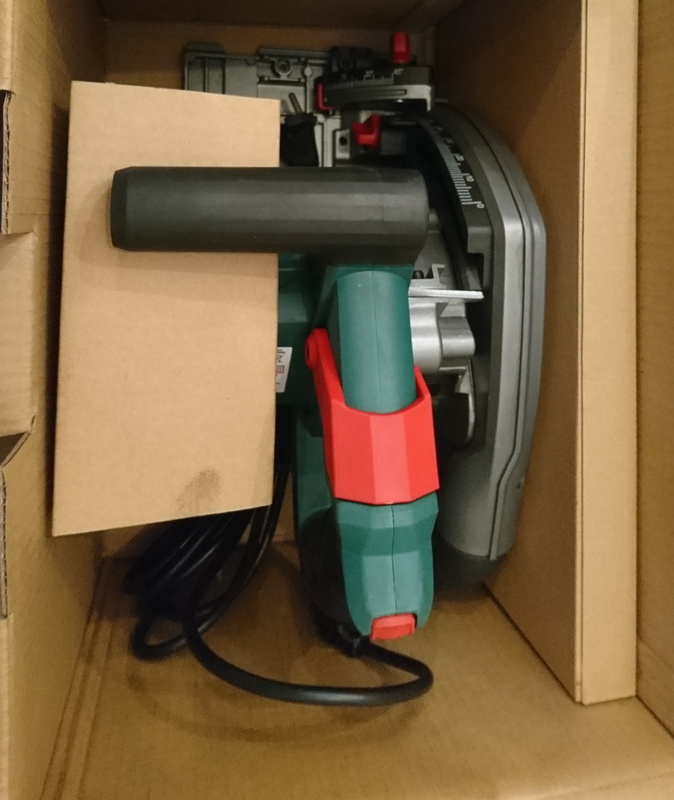
The Festool had better tracks with multiple clamping options and could probably handle angled cuts better (both saws can swivel on the base, but it looks a bit flimsy on Parkside) - but so far I have only needed 90-degree cuts and they are perfect.
I don’t have experience with anything in between, but I assume mid-range brands should perform at least as well, and Parkside is already good enough for my needs. If you want to get one, be aware that Parkside quality varies. Don’t blame me if your tool can’t cut straight or brakes after a week, everything is possible with Parkside.
Accessories to consider
Blades
The blade that comes with the tool is often poor quality, especially on budget tools. Parkside came with a 24-tooth blade. I intended to use the tool for precise cuts, mostly in soft materials, so I immediately replaced it with another budget blade (Dexter) but with 48 teeth. I used it on everything; it seemed to work fine on wood, plywood and cement-fibre boards (Fibo), but when I tried to cut a bamboo worktop, it burned the material.
In hindsight, it was probably the cement fibre that had dulled the blade.
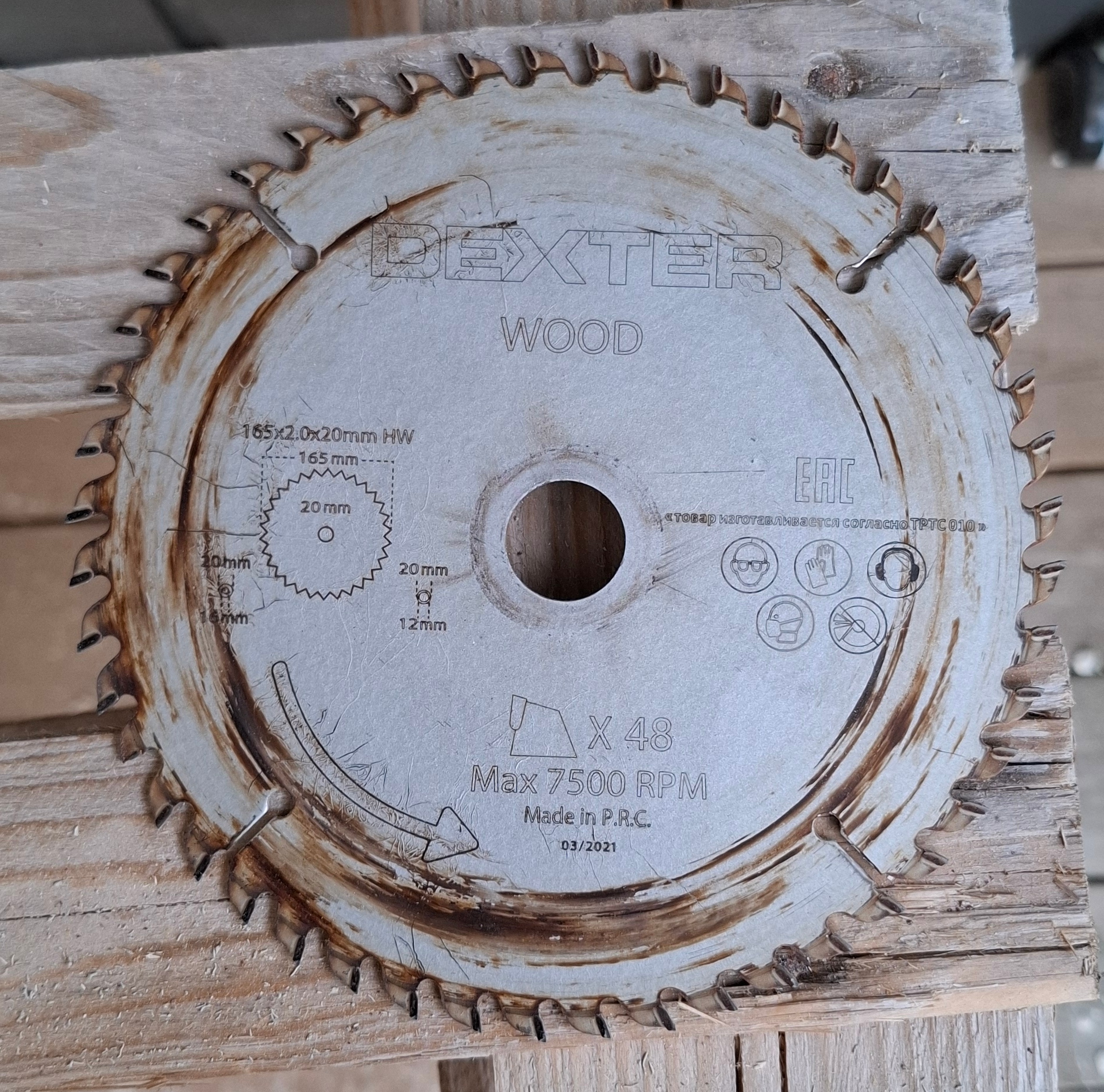
I changed my plans: instead of using one blade for everything, I ordered a 60-tooth Saxton blade for the worktop and other sheet goods, and used the original Parkside blade for cement-fibre (which can be cut very easily, as it turned out - a dull blade or the wrong blade works fine).
When replacing a blade, check the diameter and the inner hole as there are several standards.
Tracks
My saw came with two pieces of track that can be joined together. I decided to use one for my construction and deconstruction tasks and keep the other away from debris, for precise work. I should probably get more segments. Again, there are several standards; they are partly but not fully compatible, so check what fits your tool.
Clamps
The Festool came with several clamping options. Very convenient. Parkside didn’t - I usually just hold the track with my hand. Just be aware that if the track moves, you’re still going to make an accurate, straight cut, but along the wrong line.
Corded or cordless
My saw is corded. I don’t see much added value in going cordless. For some tools, being free from a cord is a great option. A plunge saw tends to stay in place, connected to a vacuum cleaner - the track is unwieldy anyway. Adding a cord to it doesn’t make any difference.